
Introduction to CMU Block Coursing in CAD
Concrete Masonry Unit (CMU) block coursing is a crucial element in construction and architectural design. These blocks are widely used due to their durability, strength, and aesthetic versatility. In architectural practices, CMU block walls represent a fundamental component, particularly in institutional, commercial, and residential construction. Coursing refers to the horizontal arrangement of CMUs, which is essential for establishing proper structural integrity as well as achieving desired visual aesthetics.
The significance of accurately modeling CMU block coursing in Computer-Aided Design (CAD) software cannot be overstated. Coursing determines not only the structural composition but also the thermal properties and moisture management of the wall assembly. An effective coursing strategy takes into account various factors such as load-bearing requirements, insulation, and potential moisture intrusion, influencing the overall performance of the building envelope. Therefore, achieving precise details in wall sections is essential for architects and engineers alike.
Despite the advantages of using CAD for design purposes, creating detailed wall sections manually presents several challenges. The intricacies involved in accurately representing the dimensions, joint configurations, and material properties can be time-consuming and prone to error. Designers often face difficulties with consistency in detailing and ensuring compliance with industry standards. Additionally, manual processes can lead to inefficiencies, particularly in larger projects where numerous revisions may be required.
To address these challenges, specialized applications designed for CMU block coursing have emerged, streamlining the wall section creation process. By employing these tools, architects and engineers can enhance accuracy and operational efficiency, allowing them to focus on innovative design solutions while minimizing manual errors. The integration of technology into the design workflow not only saves time but also improves the collaboration between various stakeholders involved in the construction process.
Overview of Specialized Software for CMU Coursing
In the domain of computer-aided design (CAD), various specialized software applications play a pivotal role in simplifying the process of creating CMU (Concrete Masonry Unit) block coursing wall sections. These applications are specifically engineered to cater to the unique requirements of masonry design, providing architects and engineers with tools that enhance both efficiency and accuracy.
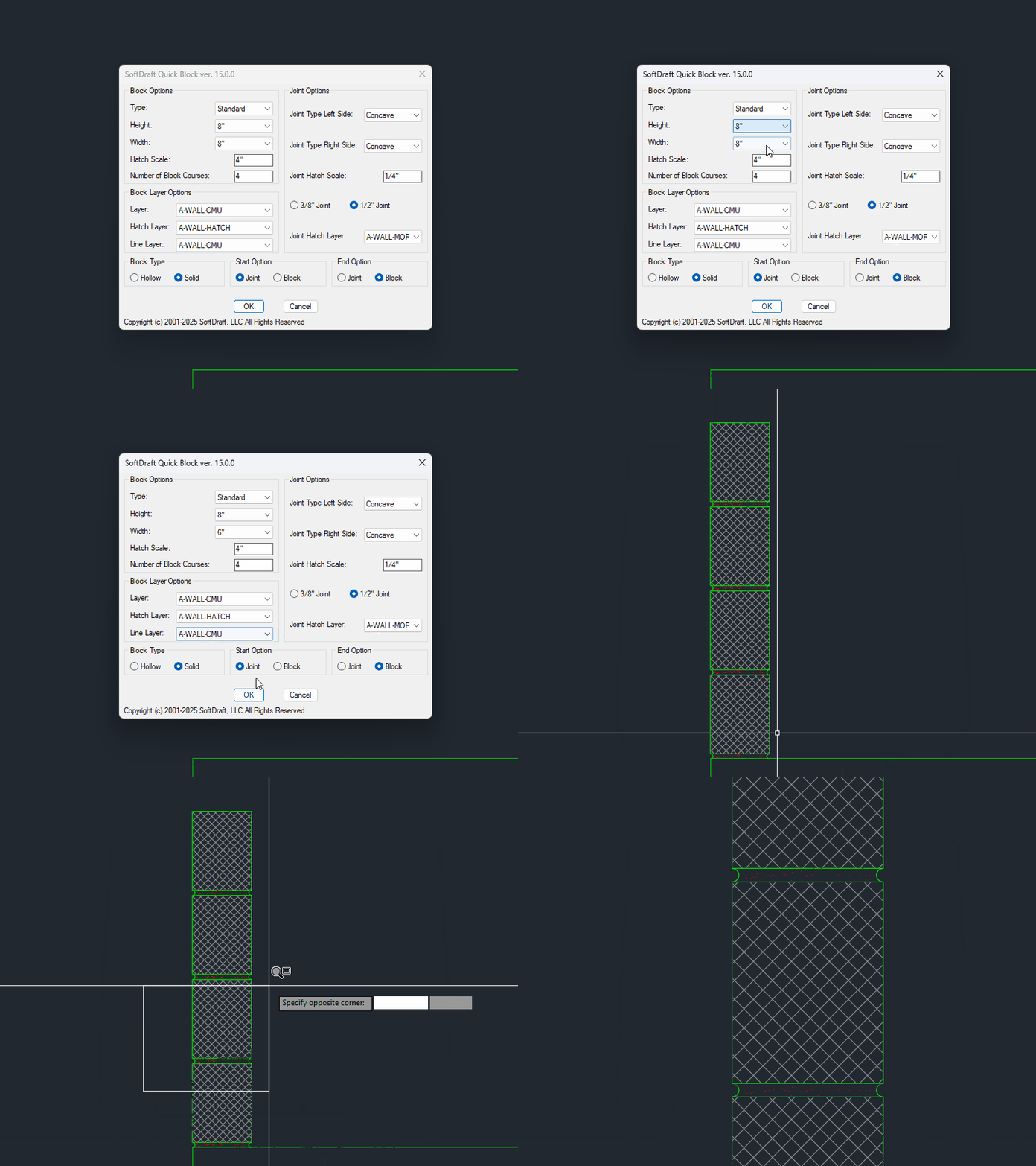
One notable software is SoftDraft Quick Block, which offers an intuitive dialog-based interface, allowing users to effortlessly navigate through the design process. This software includes vital features for selecting various block types, specifying joint details, and adjusting block dimensions. Users can easily customize and visualize their designs, promoting a more streamlined workflow. The integrated functionalities enable designers to accommodate specifications with precision, crucial for ensuring structural integrity and adherence to building codes.
Another leading software in this niche is CMU Factory, which emphasizes ease of use while delivering comprehensive solutions for CMU block design. The software’s interface is designed to facilitate swift modifications in block configurations, including alterations to joint placements and block sizes. Additionally, CMU Factory provides in-depth analysis tools that aid in the assessment of load-bearing capacities, thus ensuring that the designed structures meet both aesthetic and engineering requirements.
By employing these specialized software solutions, professionals engaged in masonry design can significantly reduce the time spent on drafting and modeling. Moreover, the collaborative features inherent in many of these applications promote teamwork by allowing multiple users to input changes and suggestions in real-time. As such, the integration of software like SoftDraft Quick Block and CMU Factory proves invaluable, effectively transforming the approach to CMU coursing wall section design in CAD. These advancements not only improve design accuracy but can also result in cost savings and enhanced project outcomes.
Step-by-Step Guide to Using CMU Coursing Software
Creating CMU block coursing wall sections in CAD can significantly enhance productivity and accuracy in architectural and construction projects. To begin, it is essential to set up the CMU coursing software, such as SoftDraft Quick Block or CMU Factory, correctly. Start by installing the software according to the manufacturer’s guidelines and ensure requisite updates are applied to maintain optimal performance.
Once the application is set up, launch it and proceed to create a new project. Here, you will be prompted to choose the appropriate units of measurement, such as imperial or metric, ensuring consistency throughout your design. Selecting the right block types is crucial. Most software solutions provide an extensive library of CMU blocks, which include variations in size and face texture. Carefully review the available options and select the blocks best suited for your specific design requirements.
After selecting the block type, the next step involves defining the dimensions of the wall. Input the desired height, width, and length while paying attention to local building codes and standards to ensure compliance. It is also important to set up joint details accurately, as this influences both aesthetics and structural integrity. Many software applications offer features that facilitate the input of mortar joint thickness, allowing for precise and swift adjustments.
Utilizing the automatic drawing features can significantly streamline the process of creating your CMU coursing wall sections. Depending on the software, you may find options to generate layouts or complete wall sections automatically based on the parameters you have specified. Furthermore, it is advisable to familiarize yourself with practical tips and best practices within the software to enhance your workflow. This includes organizing layers effectively, using templates for recurring designs, and leveraging shortcuts for common commands.
By adhering to these steps, users can effectively create detailed and accurate CMU block coursing wall sections in CAD, thereby maximizing the utility of the software and minimizing design errors.
Benefits and Future of CMU Coursing in Architectural Design
The integration of specialized software for CMU block coursing in architectural design has brought forth a myriad of benefits that significantly enhance the construction process. One of the primary advantages is the improved accuracy it provides. Accurate modeling minimizes errors in measurements and placements, resulting in structures that meet the required specifications and standards. Additionally, by automating the design process, these software solutions reduce the reliance on manual labor, which can be both time-consuming and prone to human error. Consequently, the overall efficiency of project delivery is augmented, allowing for faster completion of construction projects.
Moreover, utilizing software for CMU block coursing enhances project timelines. It streamlines the workflow, enabling architects and designers to focus on the creative aspects of their projects rather than getting bogged down by tedious calculation and layout tasks. As a result, this leads to improved collaboration among project stakeholders, including contractors and engineers, fostering a cooperative environment that accelerates the decision-making process.
Looking to the future, architectural design software is poised to evolve further, shaped by emerging trends in automation and smart design tools. Advanced technologies such as artificial intelligence and machine learning are expected to play a pivotal role in optimizing design workflows. These innovations can analyze building performance and suggest optimal configurations for CMU block coursing, pushing the boundaries of traditional design methodologies. As construction practices advance, it will become increasingly essential for architects and designers to stay abreast of these technological advancements. Embracing these tools will ensure competitiveness in an ever-evolving landscape, ultimately leading to more sustainable and efficient construction practices in the future.